Do nitinol sheets have memory properties?
2026-03-19 00:00:00
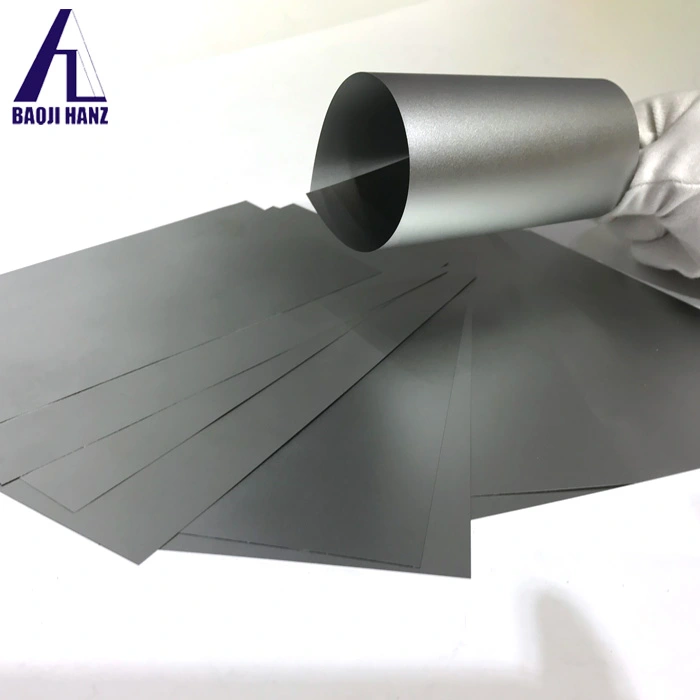
How Do Nitinol Sheets Compare to Other Industrial Materials?
Nitinol sheets are unique smart alloys with shape memory and superelasticity, which conventional metals, polymers and composites lack. They offer far greater recoverable strain, longer fatigue life and better environmental stability, making them ideal for high‑performance actuation and elastic applications.
What Are the Advantages of Using Nitinol Sheets in Manufacturing?
Nitinol sheets offer several advantages in manufacturing. Their shape memory and superelasticity allow for the creation of components that can return to their original shape after deformation, enhancing durability and functionality. Nitinol’s high corrosion resistance ensures longevity, even in harsh environments. Its flexibility and strength make it ideal for producing intricate and resilient parts. Additionally, Nitinol’s biocompatibility is crucial for medical device manufacturing. These unique properties reduce maintenance costs, improve product performance, and enable innovative designs, making Nitinol sheets highly advantageous in various manufacturing applications.
Introduction to Nitinol Sheets
Nitinol, a shape memory alloy primarily composed of nickel and titanium, exhibits extraordinary properties that differentiate it from conventional metals. Its ability to return to a predetermined shape after deformation (shape memory effect) and withstand large strains without permanent deformation (superelasticity) has revolutionized numerous industrial applications.
According to the brief application scope of nickel-titanium alloy thin sheets:
1. Ultra-thin sheets (≤ 0.1 millimeters)
Mainly used in miniature medical devices, flexible sensors, requiring high flexibility and rapid response capabilities.
2. Thin sheets (0.1 to 1.0 millimeters)
Widely used in orthodontic appliances, surgical implants, intelligent connectors, thermal switches and actuator components of consumer electronics, balancing formability and structural strength.
3. Medium-thick sheets (1.0 - 3.0 millimeters)
Suitable for industrial actuators, valve components, deformable and recoverable structures of mechanical fasteners, and high-load intelligent components.
4. Thick sheets (> 3.0 millimeters)
Used for heavy industrial equipment, shock-absorbing components, and engineering structures requiring high rigidity and shape recovery ability.
Key Properties of Nitinol Sheets
Nitinol sheets, as a typical nickel-titanium shape memory alloy, possess stable shape memory effect and superelasticity. After undergoing plastic deformation at low temperatures, they can automatically restore their preset original shape when heated to the phase transition temperature.
This material feature is derived from the reversible martensitic phase transformation inside the alloy. Compared with bulk nitinol, thin sheets maintain consistent memory performance while having better formability and flexibility, suitable for precise structural components, medical devices, smart actuators and other industrial applications.
Despite its many advantages, working with Nitinol presents challenges such as:
-
Processing Complexity: Fabricating Nitinol requires specialized knowledge and equipment due to its unique properties and behavior during processing.
-
Stress Relaxation: Nitinol can exhibit stress relaxation over time, which may affect long-term performance in certain applications if not carefully managed.
Conclusion
In conclusion, Nitinol sheets are indeed endowed with memory properties, making them invaluable across a spectrum of industrial applications. Whether in healthcare, aerospace, or consumer electronics, their unique combination of shape memory and superelasticity continues to drive innovation. By understanding these properties and their applications, industries can leverage Nitinol to enhance product performance and competitiveness in the global market.
For more details, please contact us via email at: baojihanz-niti@hanztech.cn.
References
- "Shape Memory Alloys" - Materials Science and Engineering: An Introduction, 10th Edition
- "Applications of Shape Memory Alloys in Medicine" - Journal of the Mechanical Behavior of Biomedical Materials
- "Superelasticity in Nitinol Alloys" - Shape Memory and Superelasticity