_1736944319433.webp)
_1736944319362.webp)
_1736944319389.webp)
_1736944319393.webp)
_1736944319432.webp)
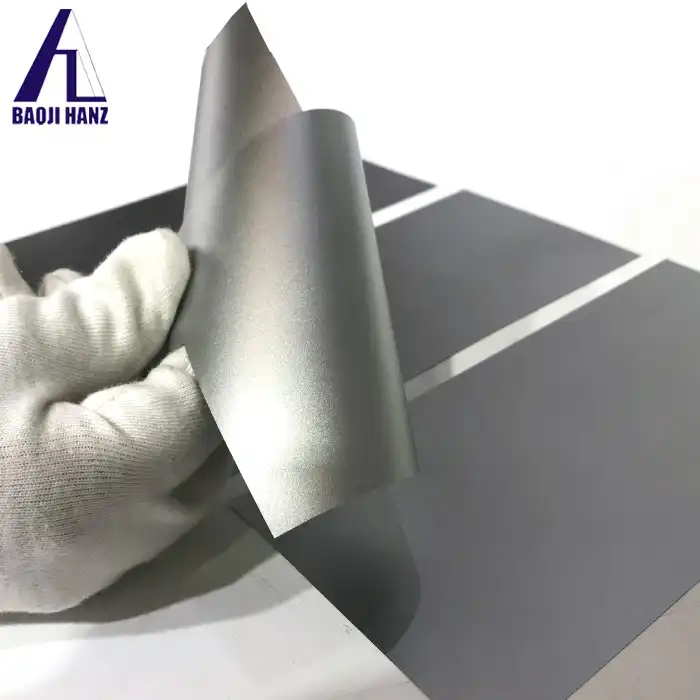
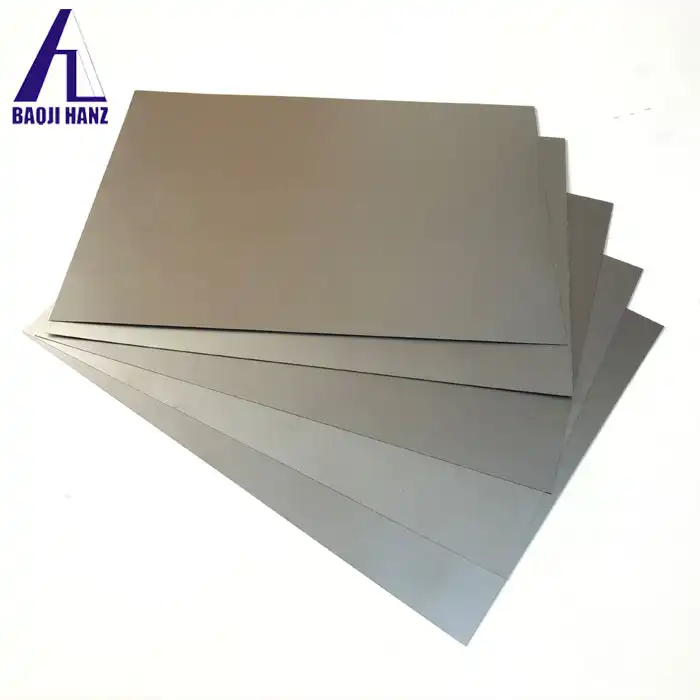
Nitinol plate sheet


MOQ:1pcs
OEM Services :Yes
Supply condition:soft, hard, extra hard
Density:6.45/cm3
Tensile strength:850MPa
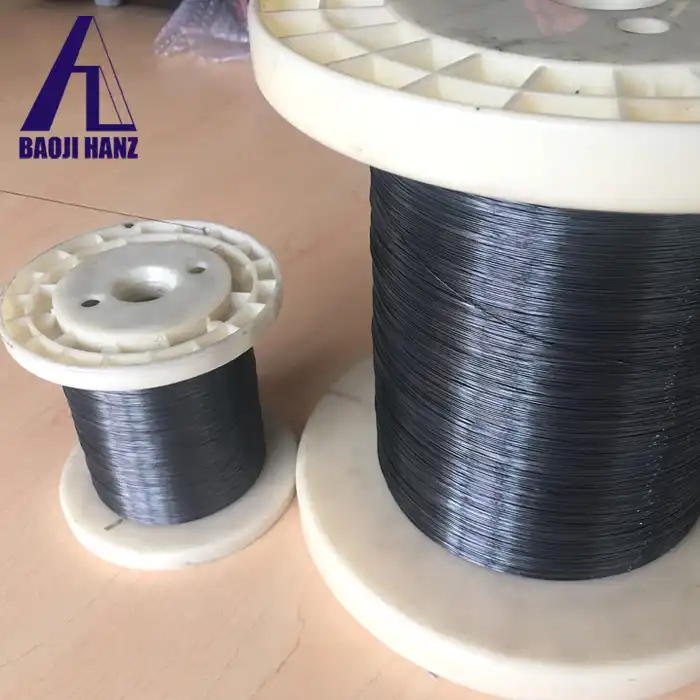
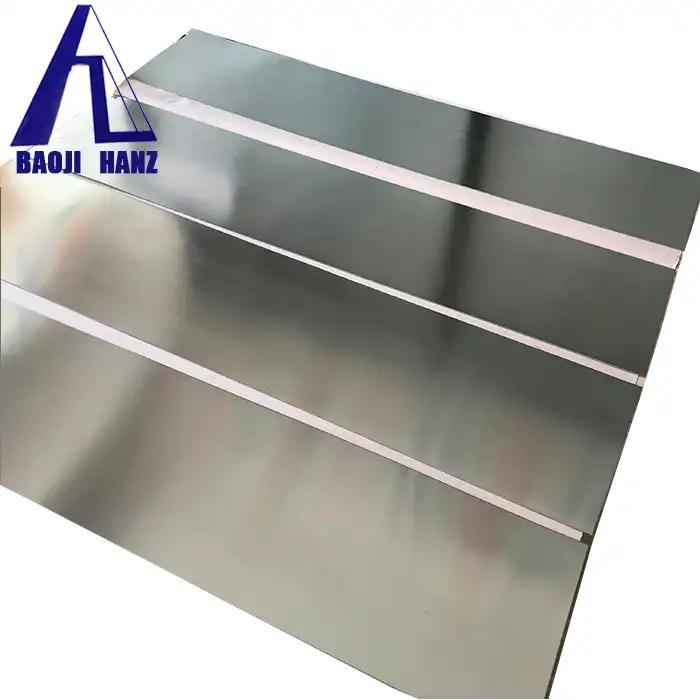
Surface condition:black (hot rolled to be oxidized), matte (hot rolled pickling), bright (cold rolled, polished)
Nitinol Plate Sheet for Medical & Industrial Applications
Nitinol plate sheet from Baoji Hanz Metal Material Co., Ltd. goes through two steps. Vacuum melting is step one. Cold rolling is step two. Thickness covers 0.03 mm to 1 mm. Dimension tolerance goes as tight as ±0.003 mm. Tensile strength sits between 550 and 1900 MPa. Af transformation temperature can be set from −20°C to 100°C. Each product meets GB 24627-2009 and ASTM F2063-18. Precision industrial components are a good match for this material. Medical device development is another.
What Sets Nitinol Sheet Apart from Conventional Alloys
Most structural metals do not behave like Nitinol. This nickel-titanium alloy has two special behaviors. One is superelasticity. The other is shape memory.
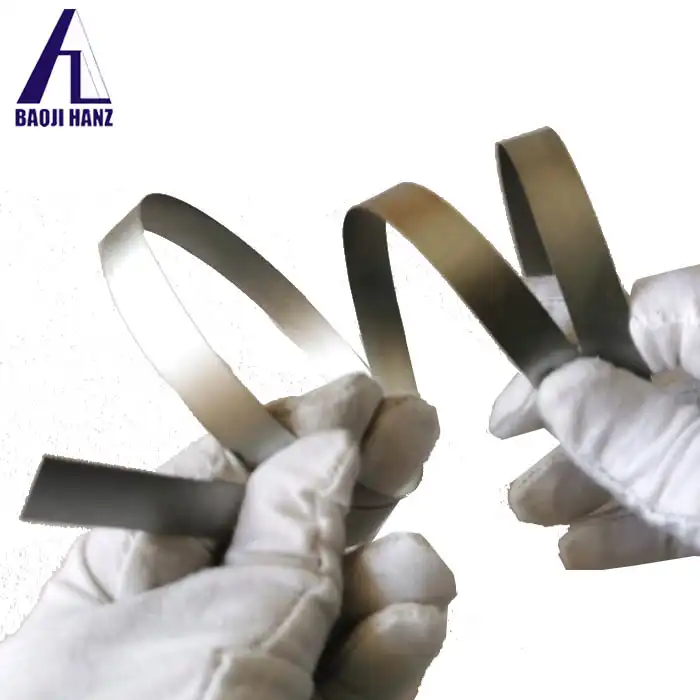
In superelastic mode, a sheet that bends returns to its first shape once the load is removed. No heat is required. Shape memory mode is different. Heat the sheet above its Af transformation temperature and it goes back to the shape set into it. Some parts have to flex again and again. Others sit in tight spaces. A third group moves when temperature changes. Nitinol sheet handles all three cases.
Ni stays at 54.5–57.0 wt%, with titanium as the balance. That range is tight for a reason. Even small composition shifts move the phase transformation temperature, and in service functional performance follows that temperature directly.
Full Technical Specifications
| Name | NiTi Superelastic/shape memory alloy, medical superelastic nickel titanium memory alloy plate |
| Brand | NiTi |
| Technical standards | GB 24627-2009, ASTM F2063-2018 |
| Surface state | cold rolled surface/pickling surface/polishing surface |
| Delivery condition | Annealed/cold rolled |
| Nickel percentage | 55.4%-56.2% |
| Melting point | 1310 °C |
| Tensile strength Annealed | 850MPa |
| Processing state | 1900MPa |
| Phase transition temperature | -100-100° C |
| Austenite | 83GPa |
| Elongation annealing state | 25-50% |
Key Characteristics
Shape recovery and superelasticity. The sheet returns to the shape it was set to, even after many deformation cycles. Across the stress–strain range set by the superelastic plateau, that response stays steady. Spring components are one fit. Actuators are another. So are devices that face cyclic loading.
Thin-gauge precision. At the tightest grade, thickness tolerance holds within ±0.003 mm. That consistency does not drift. Precision stamping depends on it. Micro-component fabrication does too. In both, part-to-part dimensional variation has to stay low.
Fatigue and corrosion resistance. The nickel-titanium mix stands up well to chemically active settings. Body fluids are one case. Industrial process media is another. Parts that stay in contact with either for years gain from this.
An Af transformation temperature you can pick. The target Af gets set when the order is placed. Any figure from −20°C to 100°C is open. Two things decide where it lands: the alloy composition and the heat treatment settings. Body temperature, near 37°C, is a common target. Ambient room temperature is another. Higher industrial thresholds come up as well.
Downstream processability. The sheets can be cut, stamped, and formed into micro-components. Surface condition - pickled, bright polished, or ground - can be selected based on downstream process requirements.
Application Scenarios
Medical Device Applications
Thin nickel-titanium sheet is used for foils in interventional devices. Micro-implant accessories use it too. So do springs inside minimally invasive instruments. One reason is shape recovery. Tight tolerance at thin gauges is another. A third: the material meets ASTM F2063-18. Put those together and Nitinol plate sheet becomes a candidate for catheter-based and endoscopic tooling work. Before a material gets chosen, builders of such tools should check the biocompatibility rules that apply to them against the relevant regulatory standards.
Industrial Applications
Thermal-actuated components, sensor springs, microswitches, and flexible structural parts in aerospace assemblies benefit from the controllable phase transformation behavior of Nitinol. Applications where a component must switch state at a defined temperature - repeatedly and within a predictable range - are well suited to this material. The adjustable Af temperature allows the sheet to be matched to the specific operating environment rather than requiring design workarounds.
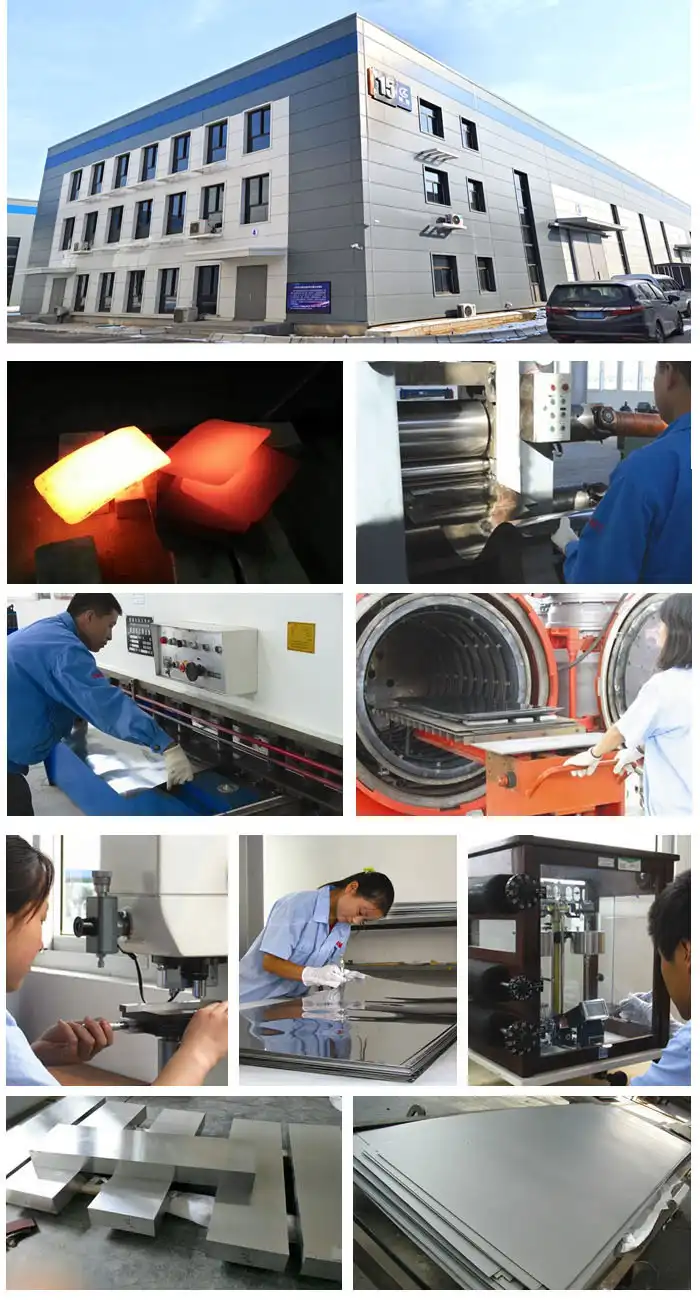
Nitinol plate sheet manufacturing and quality approach
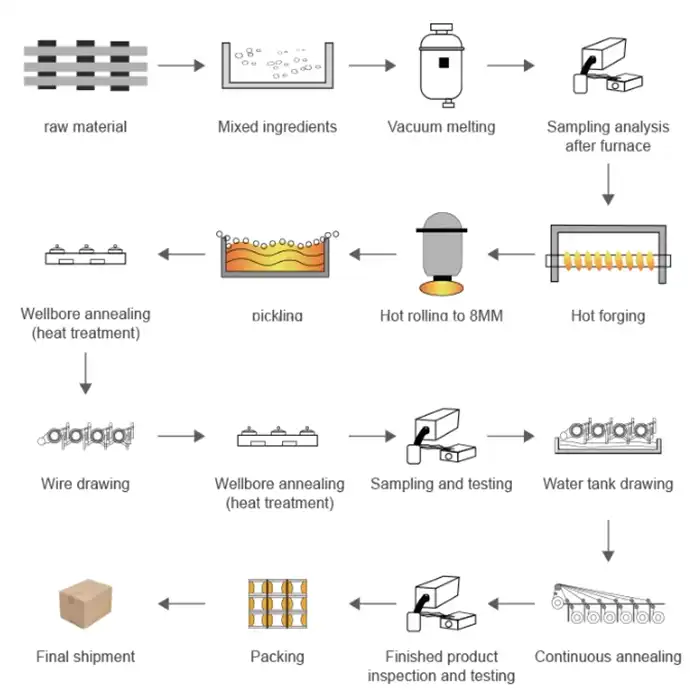
All production steps - from vacuum melting through cold rolling to final heat treatment - are carried out in-house. This process continuity supports material traceability from raw stock to finished sheet.
Each batch is checked for chemical composition and mechanical properties. DSC phase transformation temperature gets tested as well. Just ask for the test reports and they ship with the goods. Supply follows GB 24627-2009 and ASTM F2063-18. Those standards cover domestic procurement specs and international ones alike.
You can choose the thickness. Af transformation temperature, surface finish, and packaging format can be set to order too. Project needs decide which you get. Flat raw material sheets are one option. Parts that have already gone through more processing are another.
Customization Options
These parameters can be set when you place an order:
- Thickness: 0.03 mm ultrathin foil up to 1 mm. Ranges outside this window are open to discussion, depending on the application and the volume
- Af transformation temperature: specified at order stage within −20°C to 100°C
- Surface treatment: you can choose pickled, bright polished, or ground
- Packaging: shockproof and moisture-proof comes as standard. Goods stay in a horizontal position during transport
We also do OEM processing. Orders start at 1 kg. That amount is enough to test the material and build a Nitinol plate sheet prototype. Once it works, you can place a bigger order.

Frequently Asked Questions
Q: What thickness range is available?
A: Standard production runs from 0.03 mm up to 1 mm. Your size falls outside that range? That is something we can talk over. Two things decide it: your application and the order volume.
Q: Can the Af transformation temperature be adjusted?
A: Yes. The Af temperature comes from the alloy composition and the heat treatment. It stays inside the −20°C to 100°C range. You give us this parameter when you place the order.
Q: What surface finishes are offered?
A: There are three choices. One is pickled, with a matte finish. Another is bright polished. The last is ground. Your pick depends on the downstream process and the dimensions you need.
Q: Are test reports provided?
A: Yes. Each batch has its own report. That report covers chemical composition, mechanical properties, and DSC phase transformation temperature. Ask us, and we will send the reports.
Q: What standards do the sheets meet?
A: Every product we make falls under GB 24627-2009 and ASTM F2063-18.
Q: What is the minimum order quantity?
A: You can order from 1 kg. That works for R&D sampling. It also fits prototype builds and the first production runs.
Contact Us
Need a quote, or want to talk about your application? Send your thickness, Af temperature, and surface requirements for Nitinol plate sheet to baojihanz-niti@hanztech.cn.
_1730384983886.webp "nitinol medic tube")