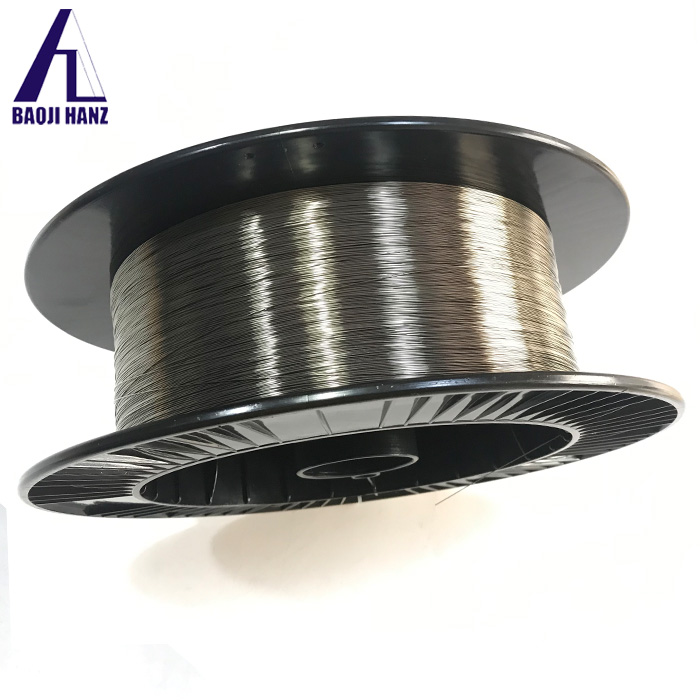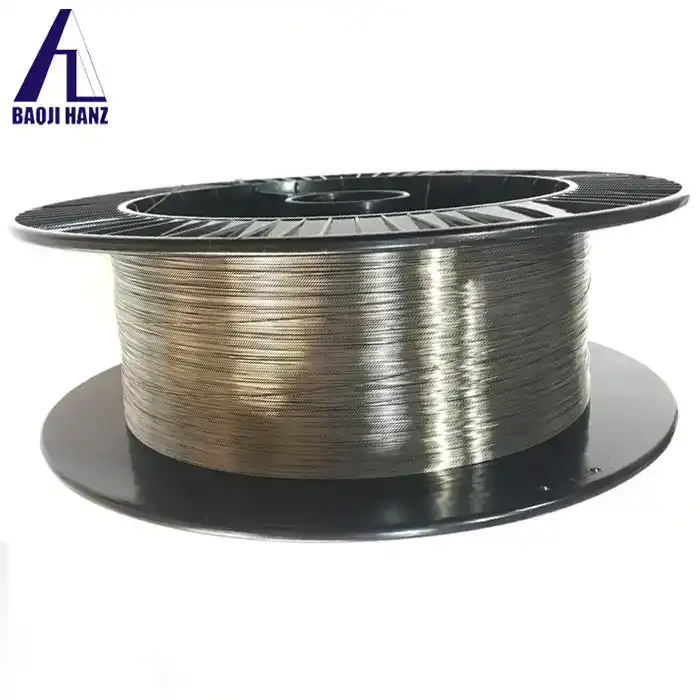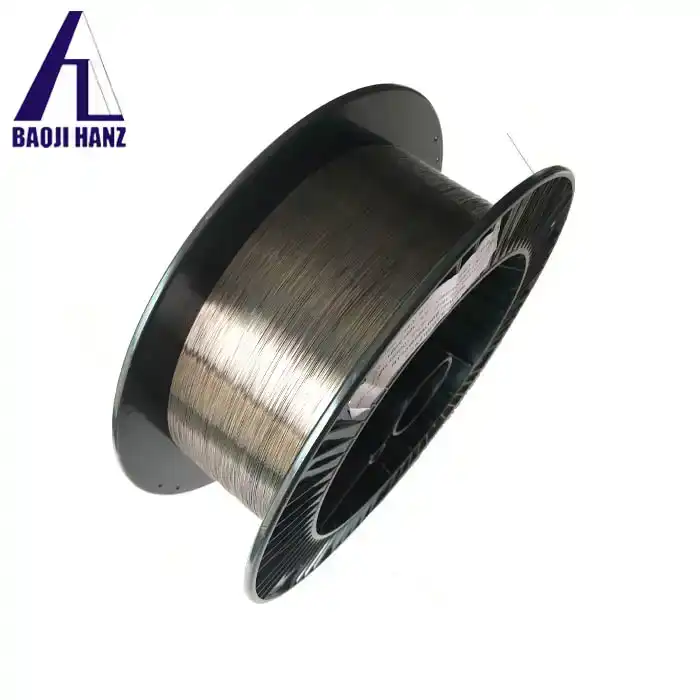
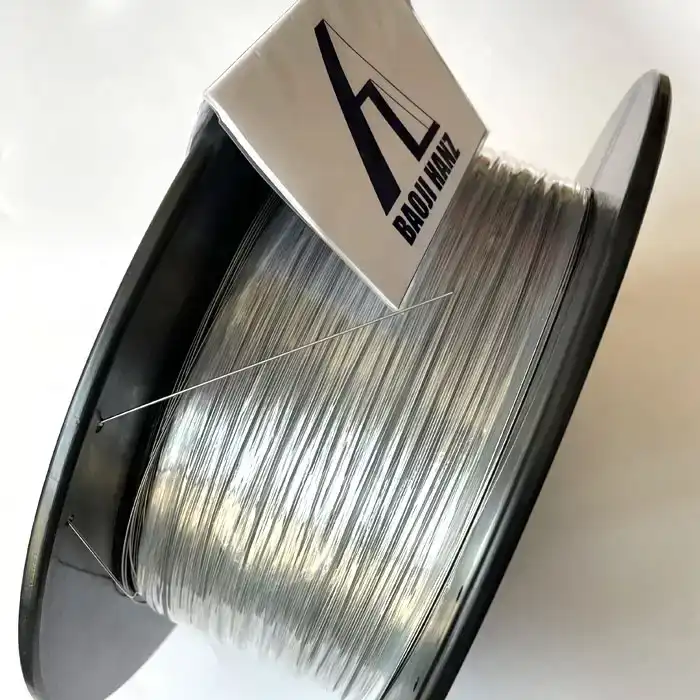
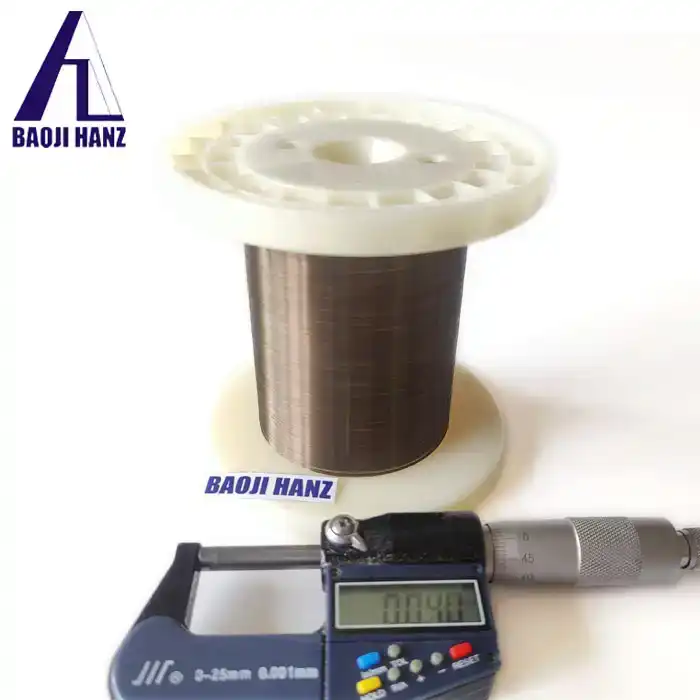
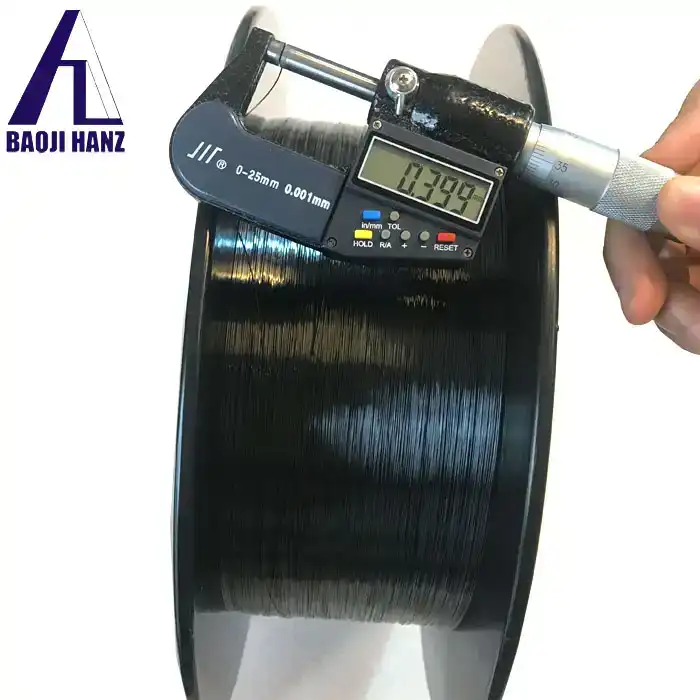
Nitinol wire


2. Superelastic
3. Af-30-20 Degree ℃
4.Diameter range: 0.015-3mm
5.Surface options: light oxide/ Black/ Polished
5.Lead time: 3-15 days, if sizes are available in stock, only 3 days for shipping
6.MOQ: 1KG
Nitinol Wire for Medical & Industrial Applications - Superelastic Shape Memory Alloy Wire Solutions
Tough medical and industrial jobs are what this Nitinol wire handles. Baoji Hanz Metal Material Co., Ltd. makes it. Diameters run from Φ0.025 to 4 mm, and the Af transformation temperature lands between −10°C and 80°C. A custom figure is possible on request. Tensile strength comes in at ≥ 1300 MPa. Batch after batch, this superelastic nickel-titanium alloy wire holds the same phase-transformation performance. Production follows GB 24627-2009 and ASTM F2063-18. MOQ starts at 2 kg. Lead time runs 20–30 working days.
Characteristics
One property you get from this nickel-titanium alloy wire is superelasticity. A shape memory effect shows up as well. Bend it hard or squeeze it, and the wire still returns to its first shape. Both behaviours trace back to the alloy's phase transformation between austenite and martensite. Medical device designers care about these two properties. So do the people who build industrial assemblies, and both groups check them when they pick a material.
Tensile strength reaches ≥ 1300 MPa. Elongation is ≥ 10%. Plateau stress comes in at ≥ 480 MPa. Microsprings often use this wire. So do woven parts, interventional guide wires, and thermally actuated elements. Repeated loading is where mechanical consistency matters most in those parts.
Tolerance on the diameter is set by size. It runs from ±0.002 to ±0.02 mm. Precision assembly work depends on that. So do catheter systems and orthodontic devices. In those parts, an exact dimension decides whether the part fits and works.
Technical Specifications
| Name | Grade | Transfermation temperature AF | Form |
Standard
|
| Shape memory nitinol alloy | Ti-Ni-01 | -30℃~20℃ | wire, bar, plate, tube | ASTM F2063 or industry standard |
| Ti-Ni-02 | 21℃~100℃ | |||
| Superelastic nitinol alloy | TiNi-SS | -5℃~5℃ | ||
| Low temperature superelastic nitinol alloy | TN3 | -30℃~0℃ | ||
| TNC | 0℃~20℃ | |||
| Medical Nitinol alloy | TiNi-YY | 33+/-3℃ | ASTM F2063 | |
| Narrow Hysteresis nitinol alloy | Ti-Ni-Cu | 20-75℃ | wire, bar | industry standard |
Surface Finish Options and Delivery Conditions
Three surface finishes are on offer. Pick the one that suits your process:
- Pickled (light oxide): This finish is the standard one. Most industrial and medical pre-processing work suits it.
- Bright polished: Smooth, clean surface commonly specified for medical device applications.
- Ground: Precise surface finish for applications demanding tighter surface geometry control.
Delivery condition can be specified as cold-worked or shape-set annealed, giving you control over the mechanical behavior and shape-recovery response at the point of use.
Applications Across Medical and Industrial Fields
This superelastic alloy wire is used in precision applications where phase-transformation behavior and dimensional stability are required.
In the medical field, the wire is used for interventional guide wires and vascular stents, where flexibility and kink resistance under repeated loading are critical. It is also specified for orthodontic arch wires, dental root canal files, and surgical suture threads - applications that require reliable shape recovery over extended use.
In industrial applications, the wire, a Nitinol wire, is used in eyeglass frames that must withstand repeated bending without permanent deformation, mobile phone antennas requiring flexible yet resilient materials, and woven mesh components where consistent springback and fatigue resistance are important to product life.
The customizable Af transformation temperature - ranging from −10°C to 80°C - makes this wire suitable for thermal actuation elements, where the wire triggers mechanical movement at a predetermined temperature.
Why Choose Baoji Hanz Metal Material Co., Ltd.
1. In-house full-process manufacturing
Every stage happens in-house. That covers vacuum melting right through to the final heat treatment. As a result, the chemical composition stays stable (Ni 54.5–57.0 wt%). Phase-transformation performance also holds steady from one production batch to the next.
2. Customization capability
You can specify the diameter. So can you specify the Af transformation temperature, the surface finish, packaging method, and transportation requirements. Raw material wire is available. Finished formed parts are available too.
3. Batch-by-batch inspection
We test each batch. The checks cover chemical composition, mechanical properties, and DSC phase-transformation temperature. Just ask for the test reports. They back up your quality documentation.
4. Medical-grade and industrial-grade supply
You can get both grades from one supplier. The MOQ is low. Lead times stay under control. That suits development sampling and production orders alike.
5. Engineering support
The technical team can help you choose the right Af temperature. They also advise on surface finish. Delivery condition is matched to your application needs.
Packaging and Shipping for Nitinol wire
Wire ships either as coils of Nitinol wire or in straight lengths. Sealed packaging protects both from shock and moisture. For coils, moisture-proof paper goes around them so the surface stays intact on international shipments. Packing and transport can shift based on what the order calls for.


Frequently Asked Questions
Q: How little this product can I order?
A: Standard wire starts at 2 kg. Very fine filaments work on a different basis: 200 meters is the smallest amount.
Q: Can the Af transformation temperature be customized?
A: Yes. We can set the Af temperature anywhere from −10°C to 80°C. That way it fits your thermal actuation needs, or a response at body temperature.
Q: What surface finishes are available?
A: Three finishes are available: pickled (light oxide), bright polished, and ground. Friction, surface geometry, and how the part gets put together all play a part in which one you choose.
Q: Is this wire made to medical-grade standards?
A: Production follows GB 24627-2009 and ASTM F2063-18. There is also a medical-grade version. Let us know your needs and we will help.
Q: What test reports are available?
A: Chemical composition, mechanical properties, and DSC phase-transformation temperature tests are conducted batch by batch. Reports are available upon request to support your qualification and audit processes.
Q: What is the lead time?
A: Standard lead time is 20–30 working days. If stock sizes are available, lead time may be shorter. Contact us to confirm availability for your required specification.
Contact Us
Have a specific Nitinol wire diameter, Af temperature, or application requirement? Reach out to our team at baojihanz-niti@hanztech.cn and we will follow up with you.
YOU MAY LIKE