.webp)
.webp)
.webp)
.webp)
.webp)
Nitinol Memory Shape Alloy Spring


Density:6.45 g/cm³
Melting Point:1240-1310°C
Operating Temperature:-200°C to +100°C (depending on application)
MOQ:500pcs
Application:industry
Nitinol Memory Shape Alloy Spring for Industrial & Medical Applications - Custom Solutions with Stable Phase-Transformation Performance
Precision Nitinol Memory Shape Alloy Spring products are supplied by Baoji Hanz Metal Material Co., Ltd. NiTi alloy is the base material. Density comes in at 6.45 g/cm³. The melting point sits between 1240–1310°C. Working range covers -200°C to +100°C. Shape memory and superelastic performance stay consistent across that span. Even in harsh settings where standard metal springs fall short, both hold up. Tensile strength is ≥850 MPa. Wire diameters run from 0.05 to 5 mm. Spring outer diameters span Φ1 to Φ20 mm. Every item meets GB 24627-2009 and ASTM F2063-18.
What Makes Nitinol Springs Different from Conventional Metal Springs
A standard metal spring cannot answer temperature changes. Long cyclic loading also wears its mechanical performance down. Nitinol alloy springs behave in a different way. Bend one and it returns to its original shape. Add heat and it can expand or contract.
Thermal actuation and superelasticity together give these springs a use where conventional ones are not enough. Take a component that has to "remember" its shape. Or one that must respond at a set temperature threshold. Either job fits.
Full Technical Specifications
|
|
|
|
|
|


Key Characteristics
Performance holds steady when loading repeats. Run it through cycle after cycle. Mechanical properties do not drift. The material brings that with it. Designers are aware of this, so for parts that must last a long time under repeated stress, they call for NiTi alloy.
Programmable Af transformation temperature. Any value from 20°C to 100°C can be set for the austenite finish temperature. Once the spring hits that point, the phase changes and the motion it gives back repeats every time. Heat treatment during manufacturing sets the threshold.
Corrosion resistance. Oxidation and chemical attack are held back under normal industrial and medical conditions. Less maintenance is needed as a result. Parts also last longer in tough environments.
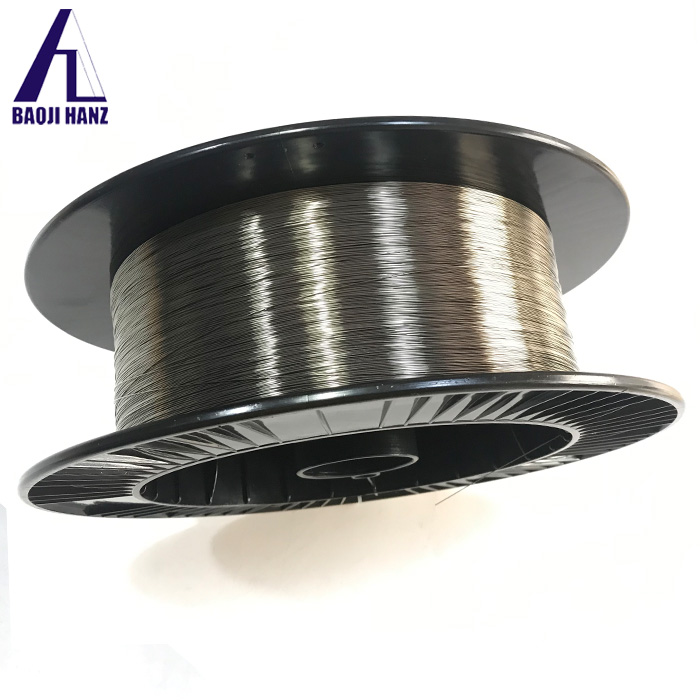
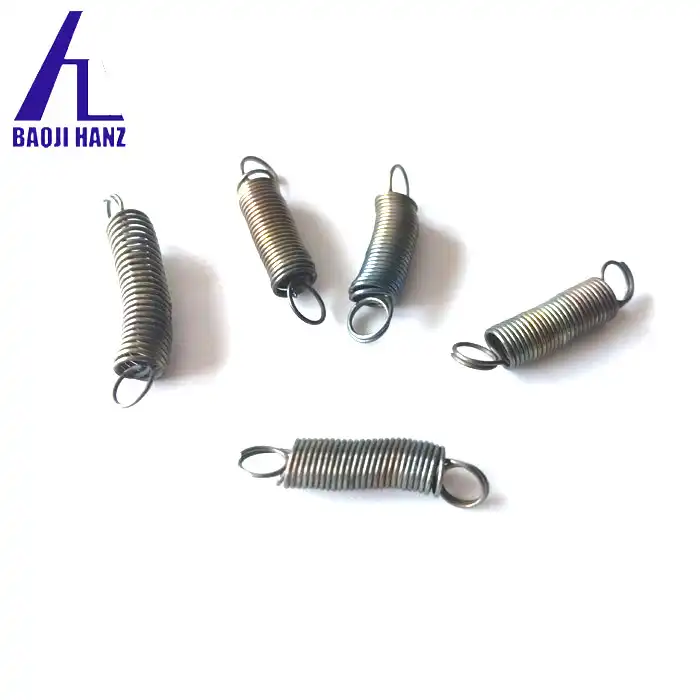
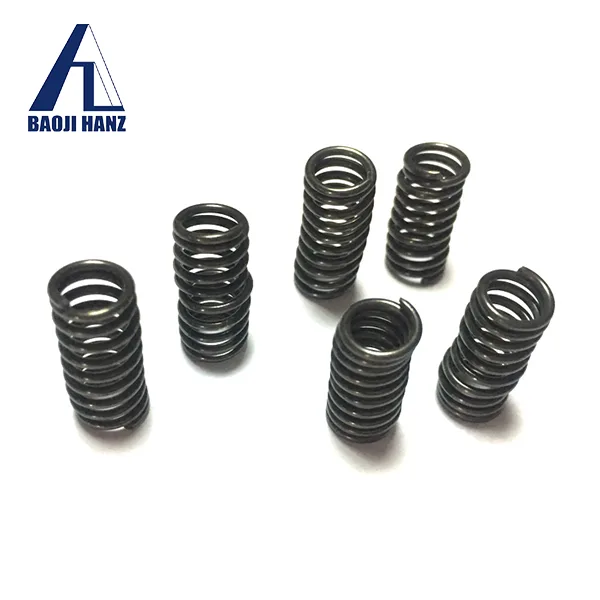
Three spring types available. We make compression and tension springs. Torsion springs are made too. Send us your drawing and we can build to it. That covers many design needs, so you do not need several suppliers.
Application Scenarios
Medical Applications
Interventional devices use these springs. Small elastic parts must also be biocompatible. Surgical tools for minimally invasive work depend on NiTi alloy to recover its shape, so they can pass through narrow access channels. Dental elastic parts use the low force and high deflection this alloy gives. Compliance with ASTM F2063-18 helps in medical device qualification.
Industrial Applications
Industrial systems use thermally actuated memory springs as temperature-driven actuators. They show up in automation and sensing work, plus control systems. Sensor elastic parts need steady performance when cyclic stress runs over long service periods. Precision elastic parts for aerospace and robotics also rely on the mechanical properties of a Nitinol Memory Shape Alloy Spring. Parts for electronics use those properties too, especially when thermal actuation or elastic recovery is part of the functional design.

Customization Options
Project requirements vary. The following parameters can be specified to match your application:
- Outer diameter and inner diameter
- Af transformation temperature (20°C–100°C range)
- Total number of coils and effective coil count
- Wire diameter (0.05–5 mm)
- Spring type: compression, tension, or torsion
- Surface finish: pickled, bright polished, or ground
- Packaging and shipping method
Both raw material forms and finished formed parts can be supplied. The MOQ is 100 pcs per drawing, which supports small R&D batches as well as larger production runs.

Nitinol Memory Shape Alloy Spring Manufacturing and Quality
Vacuum melting gets it started. Final heat treatment wraps it up. Every step between the two stays inside the production scope, and GB 24627-2009 and ASTM F2063-18 are followed the whole way through. Out of each batch comes the same chemical composition. Phase-transformation behavior also holds steady from batch to batch.
Chemical composition gets checked on every batch. So do mechanical properties. The DSC phase-transformation temperature is tested too. Test reports come on request. They can be used for incoming inspection or qualification documentation.
The same production facility makes both medical-grade and industrial-grade products. Sourcing gets easier for Nitinol Memory Shape Alloy Spring product lines that span regulated and non-regulated applications.


| Place of Origin | Shaanxi, China |
| Brand Name | Baoji hanz |
| Service | OEM |
| The Max recovery stress | 600 MPa |
| AF | 55 centigrade celsius |
| Strength | 1300 Mpa |
| Tensile Strength | 900MPa |
| surface | Black or polished |
| Materials | Nitinol alloy |
| Density | 6.45 gm/cm3 |
| Ti (Min) | 45% |
| Processing Service | Bending, Welding, Decoiling, Cutting, Punching |
| Feature | Superelastic |
| Standard | ASTMF2063-05 |
| Application | Industry |
| MOQ | 500pcs |
|
|
|
|
|
|
|
|
FAQ
Q: How small can an order be for this product?
A: 100 pcs is the smallest order we take for any drawing. The same rule applies to custom sizes and specs. Prototype amounts count too, and so do short production runs.
Q: Can the Af transformation temperature be customized?
A: Yes. The Af temperature can be set from 20°C to 100°C depending on your application. This is specified at the time of order and controlled through the heat treatment process.
Q: What spring types are available?
A: Compression springs, tension springs, and torsion springs are all available and can be manufactured to your drawing.
Q: Which standards do these springs meet?
A: GB 24627-2009 and ASTM F2063-18 are met by every product. Chemical composition and phase-transformation performance are what those standards cover.
Q: How long does production take?
A: Standard lead time is 20–35 working days depending on specification complexity and order volume. For timeline questions, contact us directly at baojihanz-niti@hanztech.cn.
Q: What inspection and documentation is provided?
A: Every batch gets tested for chemical composition and mechanical properties. The DSC phase-transformation temperature is checked too. Need the full test reports? Ask us. They back up incoming inspection and compliance documentation.
Contact Us
Send your drawing or technical inquiry to baojihanz-niti@hanztech.cn. We will review your Nitinol Memory Shape Alloy Spring requirements and respond with specifications, pricing, or engineering input as needed.
YOU MAY LIKE