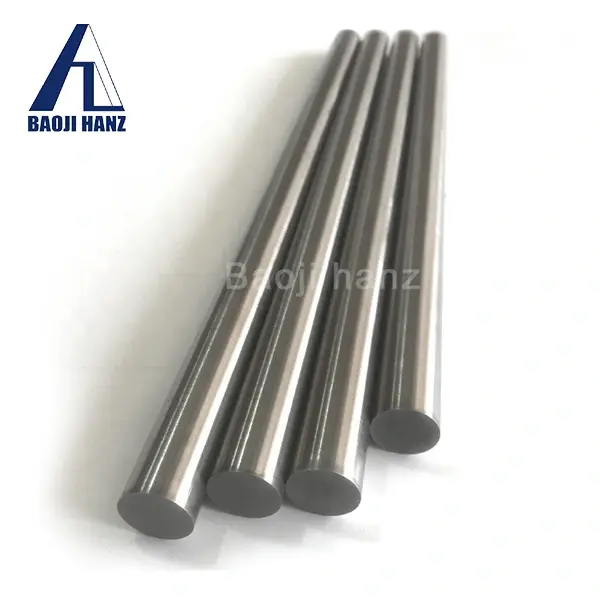
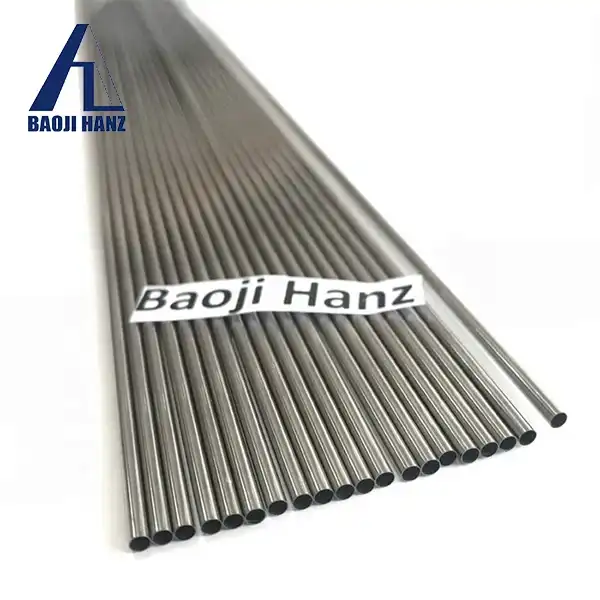
nitinol memory sheet


Nickel content:Above 50.4%
Ti (Min):45%
Thickness ≥ 0.1 mm, Width ≤ 300 mm
Strength:850
Surface:Pickling surface, bright surface
Standard:ASTM F2063,GB 24627
Density:6.5g/cm3
Technique:Cold Rolled
MOQ:500meters or 1kg
Application:Medical care and industry
Nitinol Memory Sheet for Medical and Industrial Applications - Precision Cold-Rolled NiTi Alloy
Two steps turn out the precision nitinol memory sheet at Baoji Hanz Metal Material Co., Ltd. Vacuum melting runs first. Cold rolling comes after. Nickel sits above 50.4%. Titanium makes up at least 45% of the mix. Density reads 6.45 g/cm³. Thickness starts at 0.03 mm, and the width can reach 300 mm. Every batch is tested against ASTM F2063-18 and GB 24627-2009. Those standards set the rules for chemical composition and phase-transformation performance. You can order as little as 1 kg. Delivery takes 15–30 working days.
Material Properties That Matter
Two functional properties set NiTi shape memory alloy sheet apart from ordinary metal sheet. Both are well documented.
Start with the shape memory effect. Heat the material past its transformation temperature and the geometry set into it returns. Superelastic behavior comes second. At suitable operating temperatures it springs back from large strains. No permanent deformation is left behind. Both effects work together, so the alloy fits parts that see repeated mechanical cycling.
Corrosion resistance comes with this alloy too, and so does biocompatibility. ASTM F2063-18 covers both of them. Medical devices that touch the body are a good match for the material.
Technical Specifications
|
Dimension |
Thickness ≥ 0.1 mm, Width ≤ 300 mm |
| Material Composition | Nickel-Titanium alloy (NiTi, typically 50-55% Ni) |
| Density | 6.45g\ cm3 |
|
Features |
Shape Memory |
|
Temperature Range ( Af ) |
-20~100℃ |
|
Surface |
Acid-washed surface, Bright surface |
| Transport Package | Seaworthy Packing/Wooden Box or at Client's Requir |
| Tensile Strength | 860-1100 MPa |
| Products | Grade |
Transformation Temperature AF |
Form |
|
|
Shape Memory Nitinol Alloy |
Ti-Ni-01 |
20 °C~ 40 °C |
Wire,bar,plate |
Customer Specified or Industry standard |
|
Ti-Ni-02 |
45 °C~ 90 °C |
Wire,bar,plate |
||
|
Superelastic Nitinol Alloy |
TiNi-SS |
-5 °C~ 5 °C |
Wire,bar,plate |
|
|
Low Temperature Superelastic Nitinol Alloy |
TN3 |
-20°C~-30°C |
Wire,bar,plate |
|
|
TNC |
||||
|
Medical Nitinol Alloy |
TiNi-SS |
33 ± 3 °C |
Wire,bar,plate |
ASTM F2063 |
|
Narrow Hysteresis Nitinol Alloy |
Ti-Ni-Cu |
As-Ms ≤ 5 °C |
Wire,bar |
|
|
Wide Hysteresis Nitinol Alloy |
Ti-Ni-Fe |
As-Ms ≤ 150 °C |
Wire, bar |
|
| Alloy | Chemical composition | AF point | Min elongation (%) | Max Residual elongation after 6% strain | Application | Standard |
|
NiTi |
55.6-55.8wt%Ni |
Body Temperature 20ºC-40ºC |
15 | 0.1 | Orthotic Arches | ASTM F2063 |
Characteristics
Tight dimensional tolerances. Thickness stays inside ±0.003–±0.02 mm. The spec sets the exact figure. Designers of micro-components depend on that level of control. Foils for interventional devices need it as well. Shift the size a little and function changes right away.
You can tune the phase-change temperature. The Af point can land anywhere between -20°C and 100°C. Tell us which working condition your part will see. We then build the alloy around that transformation range.
Fatigue and corrosion resistance. Deform the material again and again and it still does not wear down. Spring elements suit it well. Actuators built to serve for years do too.
Cuttable and stampable. Precision-stamped micro-parts can be made from the sheet. So can custom-cut components. Both help downstream fabrication.
Typical Applications
Medical device uses. Foil for interventional devices is one case. Accessories for micro-implants are another. Springs show up often in minimally invasive instruments too. Here the ultra-thin format pays off. ASTM F2063-18 is also met by the nitinol memory sheet material. If a device design calls for tight dimensions and traceable material, this grade fits.
Industrial uses. Thermal-actuated parts are one area. Sensor springs and micro-switches show up often too. Aerospace assemblies also use flexible structural parts. When heat cycles repeat, the alloy returns to its shape in a way you can predict. That suits jobs needing steady actuation across many cycles.
Both medical-grade and industrial-grade specifications are available.
Production and Quality of nitinol memory sheet
All production steps - from vacuum melting through cold rolling to final heat treatment - are carried out internally at Baoji Hanz. Each batch undergoes testing for chemical composition, mechanical properties, and DSC phase-transformation temperature. Test reports are available upon request.
The facility is located in Baoji Titanium Valley Nonferrous Metals Base, a production base specialized in nonferrous metal alloys including NiTi.
This packaging is made for shipping abroad. Shock and moisture both get blocked. Sheets lie flat, so their geometry comes through the trip untouched.


Customization Options
- Thickness within 0.03–1 mm range
- The Af transformation temperature falls between -20°C and 100°C.
- Finish options are pickled, bright polished, or ground
- We ship it cold-rolled or shape-set annealed
- You can order raw sheet or formed parts that are ready to use
Alloy selection is one area where the engineering team can help. They also handle questions about nitinol memory sheet and transformation temperature specification and processing.

FAQ
Q: What thickness range is available?
A: Thickness goes from 0.03 mm up to 1 mm. After a different number inside that range? We can build the setup around your design.
Q: Can the phase-transformation temperature be set?
A: Yes. The Af temperature can be set anywhere from -20°C to 100°C. What is your target operating condition? Tell the technical team. They will then set up the alloy to match it.
Q: What surface finishes are offered?
A: You can choose from three finishes. They are pickled surface, bright polished, and ground. Each one fits a different downstream processing requirement.
Q: Is this material appropriate for medical device applications?
A: The alloy is produced to ASTM F2063-18 and GB 24627-2009. Interventional foils rely on it. Micro-implant accessories and parts for minimally invasive instruments use it too. Your own qualification process has to confirm if it fits a given device.
Q: What is the minimum order quantity?
A: 1 kg is the smallest order we take. That is enough for prototyping work and small-batch runs.
Q: What documentation is available?
A: Ask us and test reports will be sent for each batch. Chemical composition is covered in them, along with mechanical properties and DSC phase-transformation temperature.
Contact Us
Send your specifications or inquiry to baojihanz-niti@hanztech.cn. The team can provide nitinol memory sheet datasheet, pricing, and sample arrangements.
YOU MAY LIKE
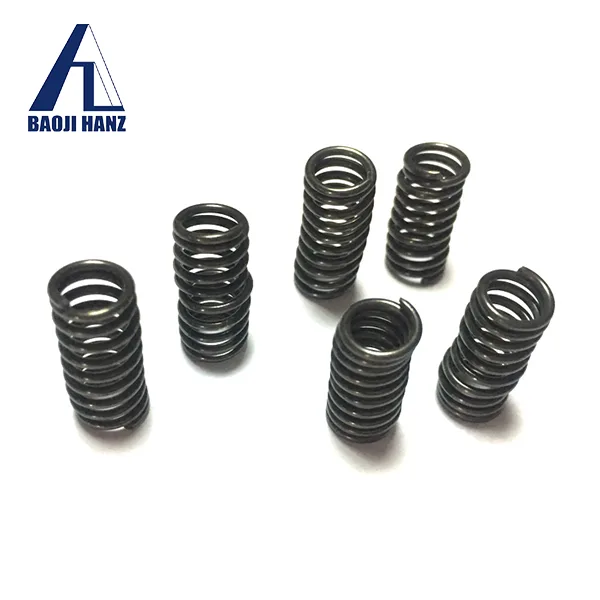
_1729338131804.webp "superelastic nitinol wire")