_1794476532782.webp)
_1794476532838.webp)
_1794476532843.webp)
_1794476532881.webp)
_1794476532879.webp)
_1794476532891.webp)
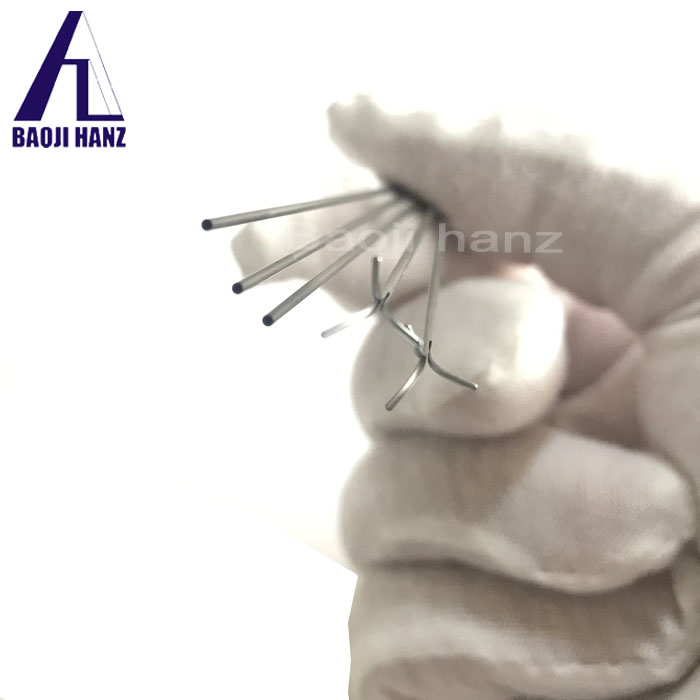
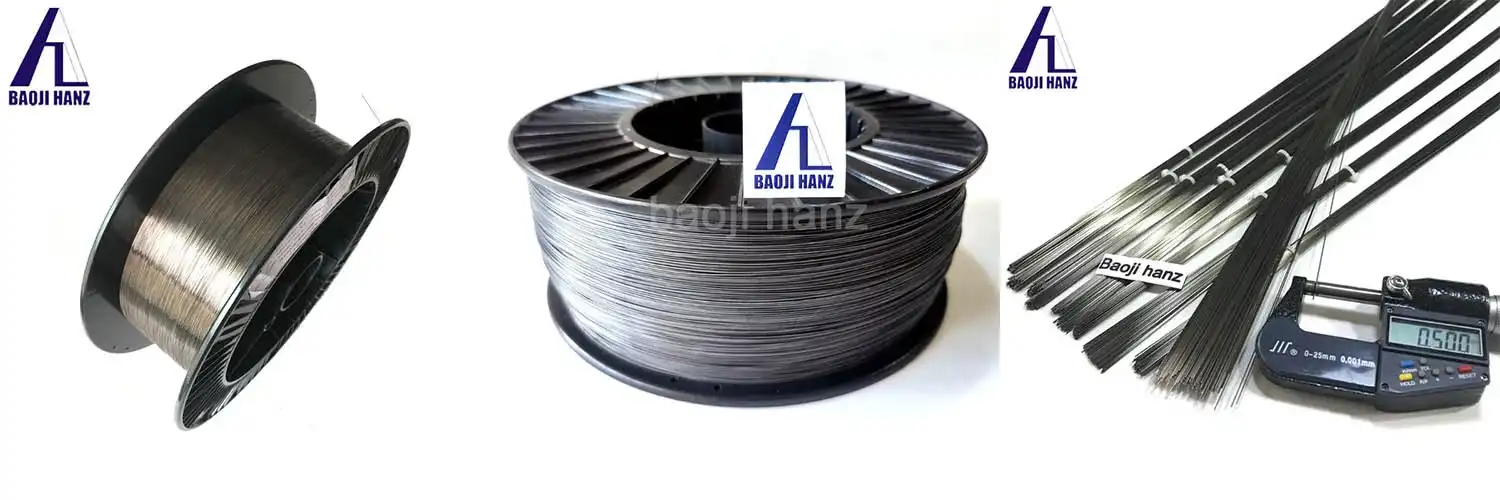
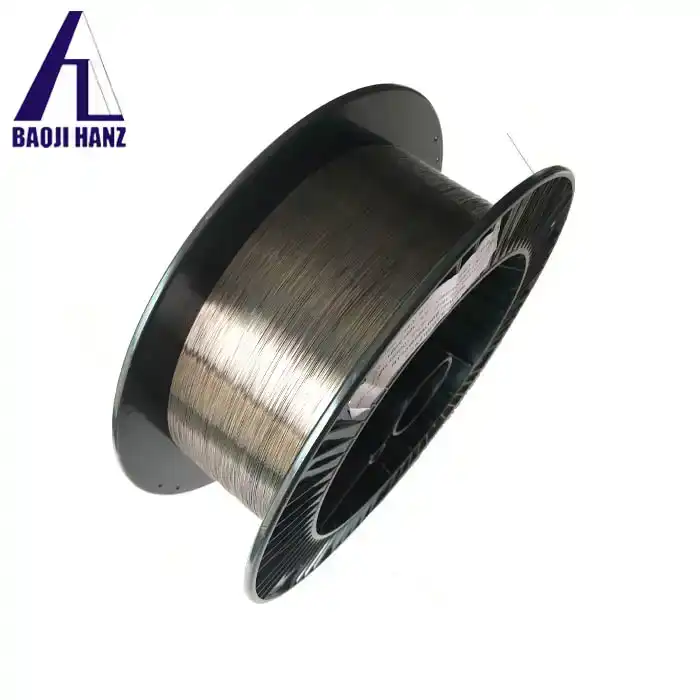
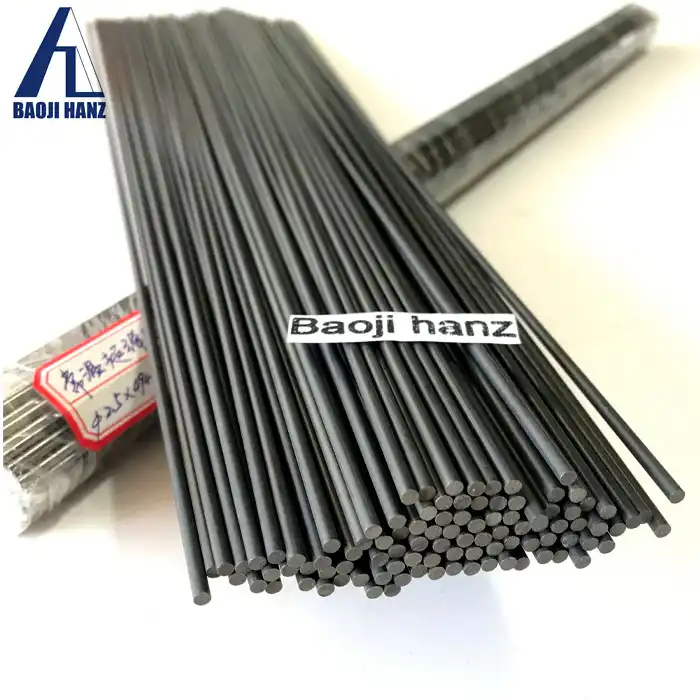
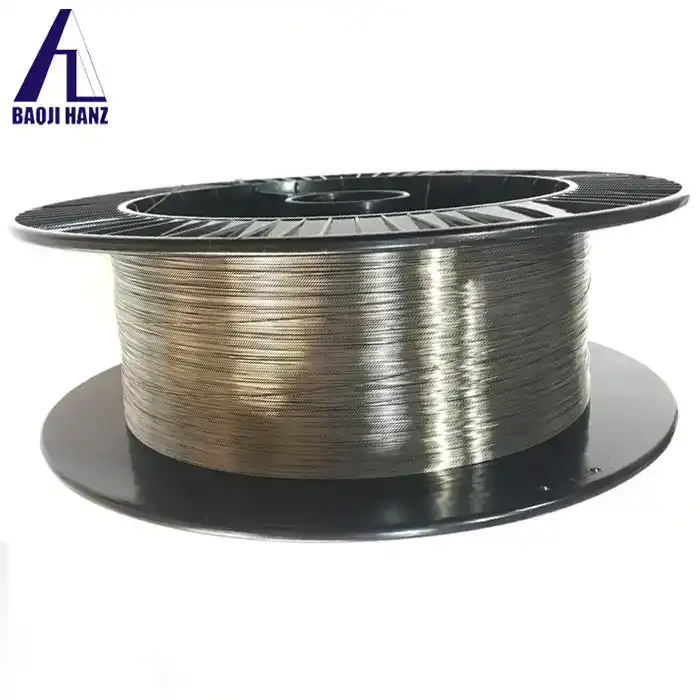
nitinol alloy wire


Property: super elastic
Surface: black, polished
Available size: dia0.25mm, 0.3mm, 0.4mm, 0.5mm etc
MOQ: 10 meters
Lead time: 5-20 work days
Nitinol Alloy Wire for Medical & Industrial Applications
Baoji Hanz Metal Material Co., Ltd. makes nitinol alloy wire in diameters from Φ0.025–4 mm. Tensile strength hits ≥ 1300 MPa. You can set the Af transformation temperature anywhere from −10°C to +80°C. Each batch is produced at the Baoji Titanium Valley Nonferrous Metals Base. It meets GB 24627-2009 and ASTM F2063-18. Chemical composition gets tested. Mechanical properties and DSC phase-transformation temperature get tested too. The smallest order is 10 meters. Normal lead time is 5–20 working days.
What Sets This Wire Apart
Metal wire often ends up in precision medical devices. Fine industrial parts use it too. Most of that wire hits the same problem. Bend it enough times and fatigue shows up. Cracks can form. Sometimes the part stays bent for good. Nickel-titanium alloy works another way.
The mix is Ni 54.5–57.0 wt%. Ti makes up the rest. Real superelasticity comes from that chemistry. So does a shape memory effect you can count on. Bend it. Load it again and again. It springs back to the shape it started with. Standard spring steels and stainless alloys cannot manage it.
Two steps decide the microstructure: vacuum melting, then the final heat treatment. Both run in-house. Because everything stays under one roof, batches differ less. And if anything drifts, you can trace it back to where it started.
Other teams buy material for prototyping or scale-up work. For them the low MOQ keeps trials cheap. Standard orders start at 10 meters. Fine filaments start at 200 meters. Lead time is short too, 5–20 working days. So a material trial costs less and takes less time.
Technical Specifications
| Diameter/mm | Hot drawing method | Temperature/℃ | wire speed(m/s-1) | pass reduction/mm |
| 8.5-6.5 | Direct electric heating | 760-800 | 2-3 | 1-0.5 |
| 6.5-3.0 | Direct electric heating | 650-750 | 3-5 | 0.5-0.3 |
| 3.0-3.2 | Electric heating radiation heating | 600-650 | 5-9 | 0.3-0.25 |
| 2.0-0.8 | Electric heating radiation heating | 600-650 | 9-12 | 0.25-0.08 |
| 0.8-0.5 | Electric heating radiation heating | 500-600 | 12-15 | 0.08-0.04 |
| 0.5-0.25 | Thermal conductivity of electric heating plate | 400-800 | 15-25 | 0.04-0.01 |
Key Properties
After serious deformation the wire goes back to its original shape. That comes from superelasticity and shape memory effect. Guide wires that have to steer through curved anatomical paths need exactly this. So do orthodontic arch wires holding a steady force over time, and actuating parts inside industrial mechanisms.
Tight dimensional tolerances are held right across production, down to ±0.002 mm. That kind of control matters when what sits downstream is a micro-spring or an intervention guide wire. Precision-woven mesh structures count too. In those parts, a small change in diameter changes how they work.
Fatigue and corrosion resistance come from the nickel-titanium alloy itself. For medical work, the wire also comes in medical-grade form. That grade suits vascular stents and dental root canal files. Suture threads use it as well.
Customizable Af transformation temperature (−10°C to +80°C) allows the phase-change trigger point to be specified based on your application's thermal operating range, which is relevant for thermal actuation components.
Processing characteristics - the wire bends smoothly and handles coiling and weaving of nitinol alloy wire without brittleness - are practical considerations for production teams working with fine gauges.
Applications
Medical devices take most of this wire. A vascular guide wire has to resist kinks and spring back into shape, so it can steer through curved vessels. Orthodontic arch wires must hold a steady force over long periods. Vascular stents depend on what nickel-titanium gives them: flexibility, recovery, and material stability. Dental root canal files need it as well. Suture threads are no different.
Industrial components often call for this alloy. Woven stents, eyeglass frames, and mobile phone antennas are three examples. In all of them, the part has to keep bending and springing back while it is in use. That is part of the design brief. Eyeglass frames show the gain clearly. The alloy weighs less than the metals usually used for frames, and it returns to shape after flexing.
You can order plain wire. You can also order formed parts that are already finished. Either way, the material fits work that starts at the prototype bench and ends in volume supply.
Manufacturing and quality of nitinol alloy wire
All of it takes place in-house, at the Baoji Titanium Valley Nonferrous Metals Base. Vacuum melting is part of that run. So is the final heat treatment. One site handles the full route, which makes each stage simpler to watch. And if you have to show that one batch lines up with the next, the paperwork trail is easier to follow.
Here the rules come from two standards: GB 24627-2009 and ASTM F2063-18. Between them they set the chemical composition limits. They also cover the phase-transformation performance that must be reached, under Chinese national rules and international ones.
Every batch is inspected. That check takes in chemical composition and mechanical properties. DSC phase-transformation temperature is in there too. Want the test reports? Just ask. They are useful for your own quality records, or for a filing to a regulator.
You can pick the diameter, anywhere from Φ0.025 to 4 mm. The Af transformation temperature is your call too. So is the surface finish: pickled, bright polished, or ground. Packaging format is another choice you make. Wire comes in both medical-grade and industrial-grade.


Packaging
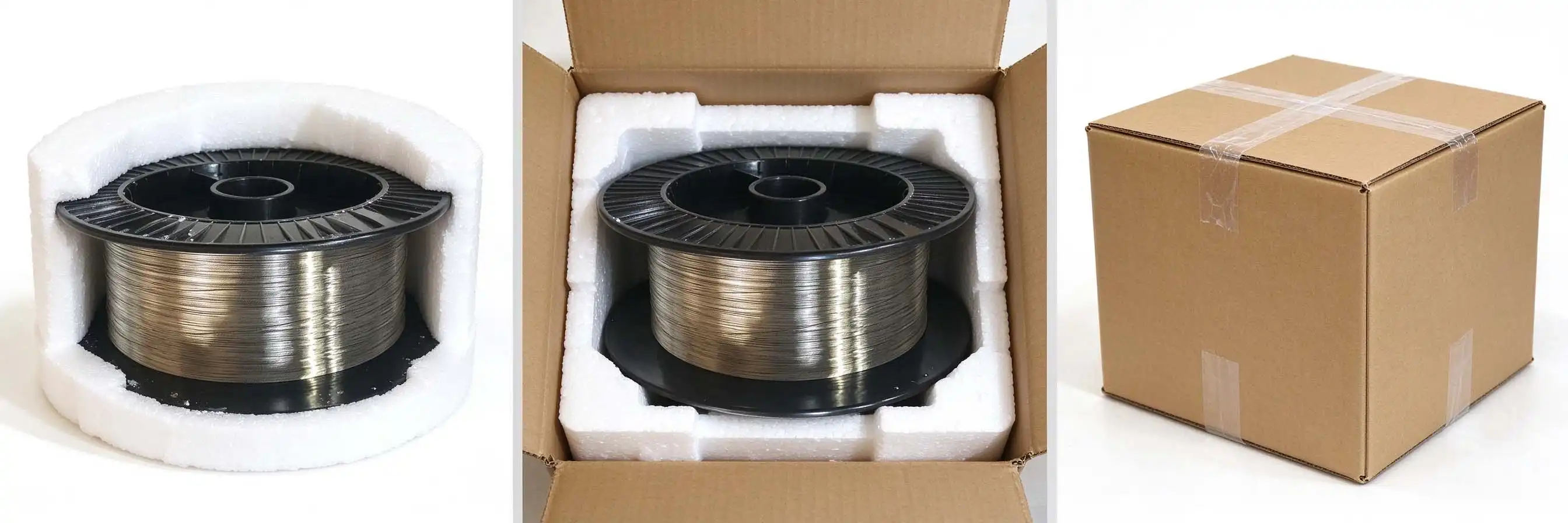
Order the wire as coils, or ask for straight lengths. Packing uses sealed materials that hold up against shock and moisture. Coils of nitinol alloy wire are wrapped in moisture-proof paper. That keeps them safe in transit and in storage. Does your shipping setup need something else? Custom packaging can be discussed.
Frequently Asked Questions
Q: What diameters can I get, and is a custom size an option?
A: The standard sizes are Φ0.25 mm, 0.3 mm, 0.4 mm, and 0.5 mm. Overall, production covers Φ0.025–4 mm. Inside that range you can ask for custom diameters. Packaging, surface finish, and custom Af temperature can also be arranged.
Q: What is the minimum order quantity?
A: Standard orders start at 10 meters MOQ. Fine filaments need at least 200 meters. On weight-based orders, 2 kg is the floor. That low entry point lets you run material trials or prototyping before you commit to bigger volumes.
Q: Do you provide test reports?
A: Yes. We test every batch. Chemical composition gets checked, so do mechanical properties and DSC phase-transformation temperature. Test reports come with the order if you ask for them.
Q: Which standards does the wire meet?
A: Production follows GB 24627-2009 and ASTM F2063-18. One of these is the Chinese national standard, the other is international. Both of them cover nickel-titanium shape memory alloy wire.
Q: Is medical-grade wire available?
A: Yes. Medical-grade wire is available and is suitable for applications including vascular stents, guide wires, orthodontic arch wires, dental root canal files, and suture threads.
Q: What is the typical lead time?
A: Standard orders are fulfilled within 5–20 working days. Custom orders - including non-standard diameters or Af temperatures - typically require 20–30 working days. Lead time is confirmed at the time of order based on the specific requirements and quantity.
Contact Us
To request a quote, samples, or technical information for nitinol alloy wire, contact us at baojihanz-06@hanztech.cn. We will respond to your inquiry promptly.
_1767770162239.webp "medical nitinol rod")

_1751266472736.webp "nitinol bar")