_1751870370590.webp)
_1751870370643.webp)

Nitinol pipe


Material: nickel titanium alloy
Chemical: Ni 54.7-57%, Ti balance
Feature: superelastic and shape memory
Surface: outside grinded, inner oxide free
Standard: ASTM F2063
Application: medical, stent, guide tube, non medical, industry, chemical, research, science, robot
Size : OD 0.2mm min , ID 0.1mm min, thickness 0.05mm min, length 800~100mm
MOQ : 5 meters
Af: 0~60C
Original: Shaanxi, China
Brand: Baoji Hanz
Nitinol Pipe for Medical & Industrial Use - Precision Superelastic Tubing Solutions
Nitinol pipe from Baoji Hanz is built on a Ni 54.5–57.0 wt% alloy, with Ti making up the balance. That grade meets ASTM F2633-19. Outer diameters span 0.25 mm to 7 mm. Walls go as thin as 0.02 mm. Along the hollow lumen there is no seam at all. Both superelastic and shape memory behavior come out of that same one-piece wall. Tensile strength reaches ≥ 1000 MPa. Elongation holds at ≥ 10%. Hard jobs in medical and industrial settings suit it well. MOQ starts at 10 pcs. Plan on 25–35 working days for lead time.
Technical Specifications
| Product name | Nitinol pipe |
| Material | nickel titanium alloy |
| Chemical | Ni54.7~57%, Ti balance |
| Feature | Superelastic and shape memory |
| Surface | Outside grinded, inner oxide free |
| Standard | ASTM F2063 |
| Application | medical, stent, guide tube, non medical, industry, chemical, research, science, robot |
| Size | OD 0.2mm min , ID 0.1mm min, thickness 0.05mm min, length 800~1000mm |
| MOQ | 5 meters |
| Af | 0~60 degree celsius |
| Original | Shaanxi, China |
| Brand |
Baoji Hanz |
|
|
| Every patch product will be treat strictly during production process. After prodution finished, QC team will inspect the goods before shipment. |
|
|


Material and Structural Characteristics
Plain metal tubes kink without much effort. Bend one often enough and cracks can show up as well. This product acts in a different way. Deformations that would ruin ordinary tubing get recovered at body temperature by the superelastic alloy. Welded or brazed options can bring internal leak paths with them. A wall with no seam shuts that door, so those paths simply cannot form here.
Shape memory work calls for an Af transformation temperature, and that value can be set anywhere from −20°C to 100°C. The design stage is where that thermal trigger point gets fixed. Nobody has to work around a property the material already carries.
Wall thickness stays within ±0.01–0.03 mm. OD holds to ±0.02–0.05 mm. Along the whole length of the tube, coaxiality does not drift. Run after run, precision assemblies then deliver the same performance.

Key Advantages
Two things come at once from a tube with no seam: superelasticity and shape memory.
Bend the alloy a long way and it springs back elastically. No deformation is left behind. Inside the body, catheters, stents, and guide tubes have to follow curved paths. Conventional metal tubing often fails in one common way. That property rules that failure out.
Tight dimensional tolerances and uniform wall thickness.
Each batch holds an OD tolerance of ±0.02–0.05 mm. Wall thickness stays inside ±0.01–0.03 mm. Even wall thickness also keeps pressure performance steady when the part carries fluid.
Fatigue resistance when loads keep cycling.
Bending cycles can be repeated, and the alloy holds up. It does not show the slow crack growth that stainless steel develops in high-flex work. That counts for implantable medical devices. It counts for industrial actuator systems that cycle too.
Secondary processing options.
Cutting, flaring, necking, and slotting are available on finished tubes. This reduces the number of downstream machining steps required before integration into your assembly.

Application Scenarios
Medical devices form the biggest area of use. Catheters take this Nitinol pipe. So do nickel-titanium stents, guide tubes, dental instruments, and bone cement delivery devices. You will also find it in minimally invasive surgical parts. There, flexibility and fatigue resistance decide whether the part works.
Industrial and research systems cover a second group. Sensor fasteners belong here, and so do pipe joints and memory alloy rings. Robotic actuators are another example, along with laboratory research apparatus. Does a system need shape actuation driven by heat, or elastic deformation over many cycles? Then this material is a candidate.
Af temperature can be adjusted from −20°C to 100°C. That range covers many activation conditions. Sub-ambient industrial settings are one. Medical deployments at body temperature are another.
Nitinol pipe manufacturing and quality control
Production runs in-house at Baoji, Shaanxi, starting with vacuum melting and ending with heat treatment. Chemical composition stays under our direct control. So does phase-transformation consistency, batch after batch.
Each order gets checked. We test the chemical composition, verify the mechanical properties, and measure the phase-transformation temperature by DSC. Ask us for the test reports. They help with your incoming inspection and your quality documentation.
You can get both medical-grade and industrial-grade supply. OD, wall thickness, length, Af temperature, surface finish, and packaging format are among the specs we can set per order.


Packaging
Tubes go out flat-laid. The packaging is sealed, and it is built to take shock and moisture. Protective material inside keeps the surface scratch free. Mechanical deformation during international transit is guarded against too. Want a different packaging format? Just ask.
Frequently Asked Questions
Q: How few units can I order of this item?
A: The MOQ sits at 10 pcs. Need a custom size? Or an Af temperature that falls outside the standard range? Talk to us first. Stock gets checked, and we tell you the expected lead time before you order.
Q: Can the Af transformation temperature be customized?
A: Yes. Af temperature can be adjusted from −20°C to 100°C. Send us your target activation temperature with your inquiry. We will set the alloy composition and heat treatment to match.
Q: What surface finishes are available?
A: The outer surface is available in oxidized or ground state. The inner surface is available in clean or oxidized state. The appropriate finish depends on your application - ground outer surfaces are typically preferred where close-tolerance fits are required.
Q: Does the tube support secondary processing?
A: Yes. Cutting, flaring, necking, and slotting are supported on finished tubes. Specify any secondary operations in your inquiry to confirm feasibility and lead time impact.
Q: What standard does this product meet?
A: The tube is made to ASTM F2633-19. That standard covers chemical composition and mechanical performance requirements.
Q: What is the standard lead time?
A: Standard lead time is 25–35 working days. Custom specifications may affect this - contact us early in your project timeline to plan accordingly.
Contact Us
Send your Nitinol pipe specifications to baojihanz-niti@hanztech.cn. Include OD, wall thickness, length, quantity, and Af temperature for a faster response.
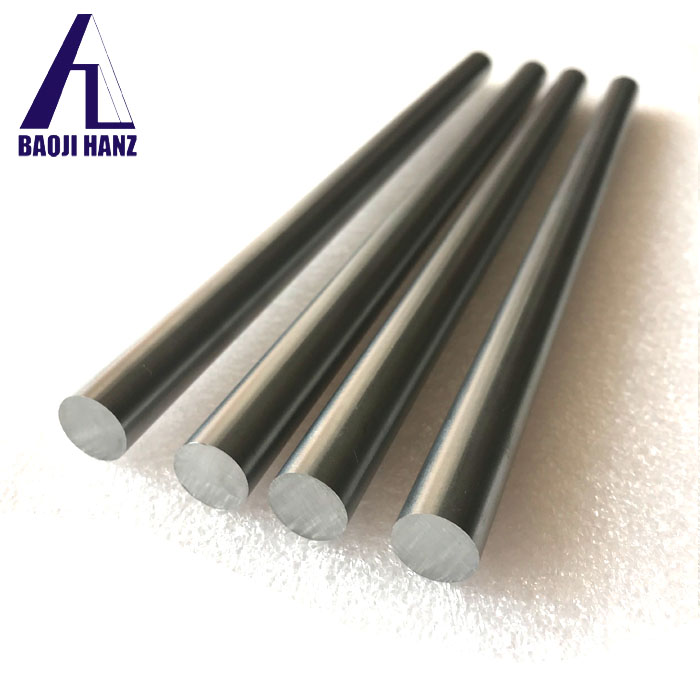

_1751266472736.webp "nitinol bar")


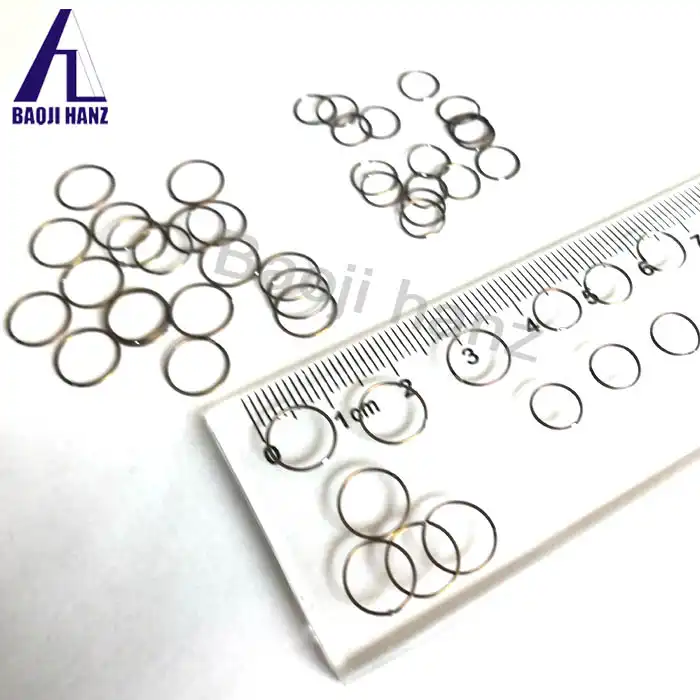
_1747884291962.webp "Nitinol tubes")